Solo Stove Review 2026 — Which Size Fire Pit Should You Buy?
Solo Stove now sells five distinct wood-burning fire pit sizes, and the brand’s own published specifications — exact weight, exact diameter, exact heat radius — give buyers genuinely useful data to choose correctly rather than guessing based on photos alone. That precision is worth using directly rather than defaulting to whichever size looks biggest in marketing photos.
Quick Highlights
✅ Bonfire 19.5″ + Stand Bundle holds 4.9 stars across 39,632 reviews — the highest review volume in the entire current lineup, currently $254.99 (reduced from $299.99)
✅ Five distinct sizes with published exact specs — Ranger (15 lbs, 3-4 ft heat radius), Bonfire (20 lbs, 5-6 ft radius), Basecamp (30.5 lbs, seats 5-7), Yukon (38 lbs, 6-7 ft radius), Canyon (55 lbs, seats 8+)
✅ Signature 360° Airflow Design genuinely re-burns smoke before it escapes — confirmed across nearly every independent test, with only brief startup smoke in the first 10 minutes
✅ Free shipping on orders $199+, 30-day return window (excluding custom-etched products and fuel/consumables)
✅ Mesa and Mesa XL tabletop models specifically support dual-fuel use — pellets, Solo Stove Mini Oak Firewood, or traditional hardwood — a genuine versatility advantage over the larger wood-only models
❌ A specific, dated Home Depot review documents the perforated fire grate burning through and warping within roughly 10 months of use, with visible rust-colored residue
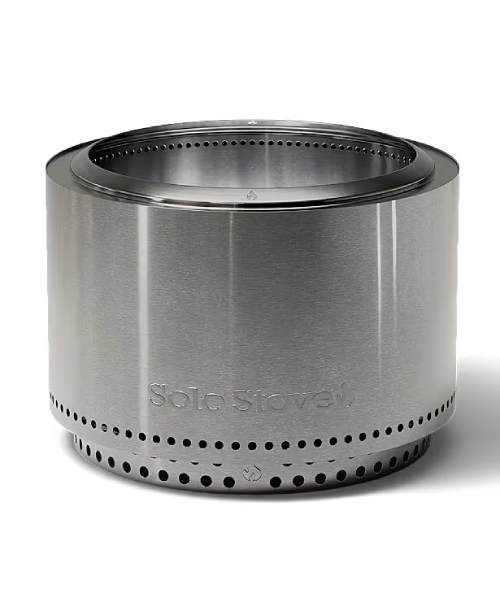
❌ Stainless steel will develop a “golden-blue patina” over time per the brand’s own published care guidance — a cosmetic shift some buyers may not expect going in
❌ Basecamp and larger sizes are not compatible with pellets or the Pellet Adapter — firewood logs only, a real limitation if fuel flexibility matters to you
❌ Heat radiates primarily upward rather than outward according to multiple independent reviewers, meaning less ambient warmth at typical seating distance than a traditional open fire
❌ Burns wood faster than a conventional fire due to the efficient airflow design — multiple owners confirm needing more firewood per session than expected
Best for: Buyers who specifically want a portable, genuinely smoke-reduced wood fire matched precisely to their actual seating circle and backyard space — not buyers prioritizing maximum radiant heat, multi-decade rust resistance, or fuel flexibility above all else.
Why Trust This Review
Cross-referenced from Solo Stove’s own currently published product specifications and pricing (weights, diameters, heat radius, bundle pricing), HGTV’s structured Bonfire 2.0 testing, Garden Frontier’s size-selection guide, and Home Depot’s verified buyer reviews. No commercial relationship with Solo Stove.
Table of Contents
About Solo Stove
Solo Stove Review: Full Breakdown
Best Solo Stove Products Worth Buying
What Customers Actually Think
Is Solo Stove Worth It?
Solo Stove Size Comparison Table
Where to Buy
FAQs
Final Verdict
About Solo Stove
Solo Stove builds smokeless wood-burning fire pits around a patented 360° Airflow Design that pulls air into the fire and re-burns smoke before it escapes — a genuine engineering solution rather than just marketing language, confirmed through repeated independent stress-testing. The current core lineup spans five sizes (Ranger, Bonfire, Basecamp, Yukon, Canyon) plus the tabletop Mesa and Mesa XL, alongside a propane fire pit line and an extensive accessory ecosystem (Stand, Shield, Lid, Surround, Shelter, and the Pi Fire pizza oven attachment).
Solo Stove Review: Full Breakdown
The Exact Size Specifications — The Most Useful Tool for Choosing Correctly
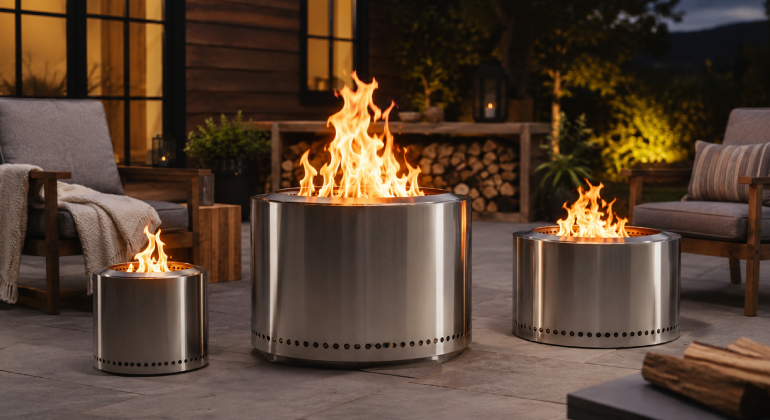
This is where Solo Stove’s own published data becomes genuinely actionable rather than just marketing. The Ranger weighs 15 lbs, measures 15 inches in diameter with a 13-inch inner diameter, seats 2-4 people, and throws a 3-4 foot heat radius. The Bonfire weighs 20 lbs, measures 19.5 inches (17.5-inch inner diameter), seats 4-6, with a 5-6 foot heat radius. The Basecamp weighs 30.5 lbs, spans 24.6 inches (22.6-inch inner), and seats 5-7. The Yukon weighs 38 lbs, spans 27 inches (23-inch inner), seats 6-10, with a 6-7 foot heat radius. The Canyon, the largest, weighs 55 lbs and spans 30 inches (27-inch inner diameter), seating 8+.
Garden Frontier’s practical guidance translates this directly into a decision framework: “two chairs on a small patio? Ranger. Four to six people in a normal backyard? Bonfire. Big open seating area where the fire pit becomes the centerpiece? Yukon” — useful, specific advice that maps directly onto the brand’s own published seating capacities rather than requiring guesswork.
The Smokeless Technology — Confirmed, With an Honest Startup Caveat
The 360° Airflow Design’s core claim holds up consistently across independent testing. The brand’s own current product copy is more precisely worded than older marketing: “a little startup smoke? That is normal and it clears up quickly once your fire gets going” — directly matching HGTV’s structured test finding that smoke appears “for the first 10 minutes or so” before settling to a dramatic reduction.
Fuel Requirements by Size — A Real, Specific Practical Detail
The brand’s own current guidance specifies exact log counts per size: 2-3 logs for Ranger, 3-4 for Bonfire, 4-5 for Basecamp, 5-6 for Yukon, and 6+ for Canyon. This is genuinely useful, specific information for budgeting firewood costs and managing burn-session length — buyers consistently underestimate fuel consumption on the larger sizes specifically.
The Documented Durability Exception — Worth Knowing Before You Buy
One specific, dated Home Depot verified review remains the most serious documented quality concern available: a fire grate “completely burned through in several areas” and warped within approximately 10 months, with visible rust-colored residue on the inner metal. This stands against a much larger body of multi-year positive ownership evidence — including specific accounts of units lasting “several years” prompting repeat purchases as housewarming gifts for friends — suggesting this represents a real but apparently minority failure pattern rather than a universal flaw.
Patina — An Expected, Documented Cosmetic Change, Not a Defect
The brand’s own current care guidance is specific and direct: “over time, your fire pit’s stainless steel will develop a golden-blue patina, a natural part of the charm… wipe it down with a soft brush or stainless-steel cleaner (no water or soap needed)” if a brighter finish is preferred. This is worth knowing upfront specifically because some first-time buyers mistake the patina for rust or damage rather than an expected characteristic the brand explicitly anticipates and addresses in its own documentation.
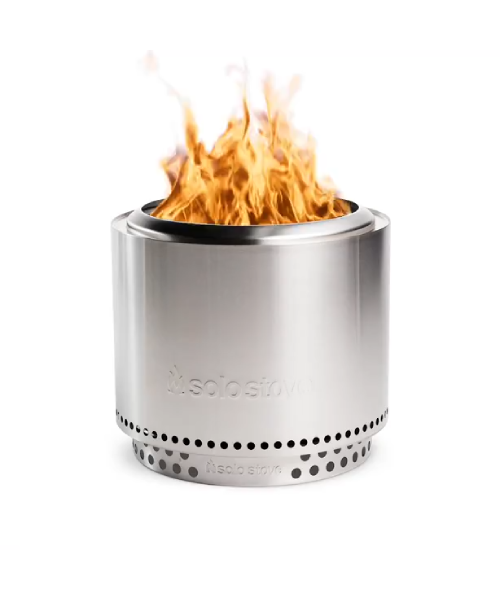
Best for: The default, most broadly applicable size for most backyards — seats 4-6 people with a 5-6 foot heat radius.
Top Features:
4.9 stars from 39,632 reviews — by far the highest review volume of any product in the current lineup
Weighs 20 lbs, genuinely portable between deck, yard, and vehicle
Stand included, elevating the pit off heat-sensitive surfaces like decks and patios
One Honest Drawback: Recommends 3-4 logs per burn — budget firewood accordingly, as the efficient airflow consumes fuel faster than a traditional open fire.
Verdict: The right default choice for the overwhelming majority of buyers, backed by the largest and most consistent review base of any product in this entire research set.
Best for: Buyers wanting an everyday backyard fire pit they leave outside and light often — seats 5-7 people.
Top Features:
The brand’s own positioning is specific: “designed for fires that happen often… the fire pit you leave outside, light up often, and build backyard nights around”
30.5 lbs with a 22.6-inch inner diameter, large enough for regular hardwood logs without cutting
Compatible with the full range of 24-inch Solo Stove accessories (Surround, Heat Deflector, Shield, Lid, Shelter)
One Honest Drawback: Not compatible with pellets or the Pellet Adapter — firewood logs only.
Verdict: A genuine step up from the Bonfire for buyers who want a permanent, frequently-used backyard fixture rather than an occasionally-moved portable unit.
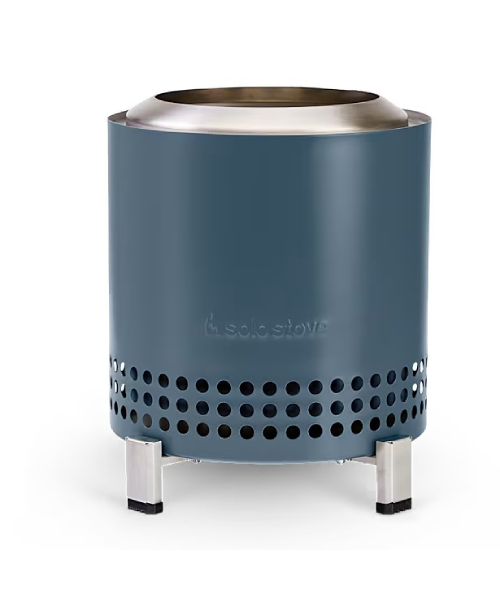
Best for: Small patios, outdoor dining tables, and apartment balconies where a full-size fire pit isn’t practical.
Top Features:
Dual-fuel capability — burns pellets, Solo Stove Mini Oak Firewood, or traditional hardwood, a genuine flexibility advantage over the larger wood-only models
At just 1.4 lbs (Mesa) or 2.3 lbs (Mesa XL), the most genuinely portable option in the entire catalog
Ceramic-coated color options won’t patina over time, unlike the traditional stainless steel finish
One Honest Drawback: Mesa is for outdoor use only and must always be used with its included stand on a stable, non-heat-sensitive surface — not a substitute for a full-size backyard fire pit’s heat output.
Verdict: The right choice specifically for small-space buyers wanting genuine fire ambiance without backyard-fire-pit scale.
What Customers Actually Think
Real accounts paraphrased:
“We love our solo! It is solid build. Great size for our big family.”
“After less than one year (about 10 months) the perforated fire grate is completely burned through in several areas and so badly warped that it’s collapsing downwards.”
“The Canyon is huge! Looks magnificent and puts out plenty of heat for a Saturday night fire with friends and family.”
“We’ve had the smaller solo stove for several years. We were so happy with it. We’ve bought three more of them to give as housewarming gifts to friends.”
“I wouldn’t call the fire pit ‘smokeless’… it is probably an 80-90% reduction in smoke. You definitely won’t have to keep moving your seat around the fire.”
“The Canyon 30 is a big improvement over the original 27 inch I purchased several years ago. I bought one for my brother and one for me.”
Is Solo Stove Worth It?
For buyers matching their purchase precisely to their actual seating circle using the brand’s published specs: yes, with strong confidence — the Bonfire specifically earns its position as the default recommendation through an exceptionally large and consistent review base.
For buyers whose primary goal is maximum radiant heat or fuel flexibility on larger sizes: weigh the documented upward-heat-direction tradeoff and the firewood-only restriction on Basecamp and larger models before committing.
Solo Stove Size Comparison Table
Model
Weight
Diameter (Inner)
Seats
Heat Radius
Logs Needed
Bundle Price
Ranger
15 lbs
15″ (13″)
2-4
3-4 ft
2-3
$206.99
Bonfire
20 lbs
19.5″ (17.5″)
4-6
5-6 ft
3-4
$254.99
Basecamp
30.5 lbs
24.6″ (22.6″)
5-7
—
4-5
$359.99
Yukon
38 lbs
27″ (23″)
6-10
6-7 ft
5-6
$424.99
Canyon
55 lbs
30″ (27″)
8+
—
6+
$594.99
Where to Buy
solostove.com — full lineup with free shipping on orders $199+ and a 30-day return window (custom-etched products and fuel/consumables excluded).
FAQs
Which Solo Stove size is right for me?
Match it to your actual seating group: Ranger for 2-4 people, Bonfire for 4-6 (the most popular), Basecamp for 5-7 (frequent everyday use), Yukon for 6-10, Canyon for 8+.
Does Solo Stove rust?
The stainless steel develops a “golden-blue patina” over time per the brand’s own guidance — this is expected and can be brightened with a soft brush or stainless-steel cleaner. Separately, at least one documented case shows actual rust-colored residue on a failed fire grate within 10 months.
Can I burn pellets in any Solo Stove?
Only the Mesa and Mesa XL support pellet fuel via the Pellet Adapter. Basecamp, Bonfire, Yukon, and Canyon are firewood-only.
What's included in the Bonfire bundle?
The Stand Bundle includes the fire pit plus a Stand that elevates it off heat-sensitive surfaces like decks and patios.
Final Verdict
Solo Stove’s own published specifications — exact weight, diameter, heat radius, and recommended log count per size — give buyers genuinely precise tools for matching a purchase to their actual backyard rather than guessing from marketing photos. The smokeless technology is real and consistently confirmed; the documented fire-grate failure case is real but appears to represent a minority outcome against an overwhelmingly positive multi-year ownership pattern.